
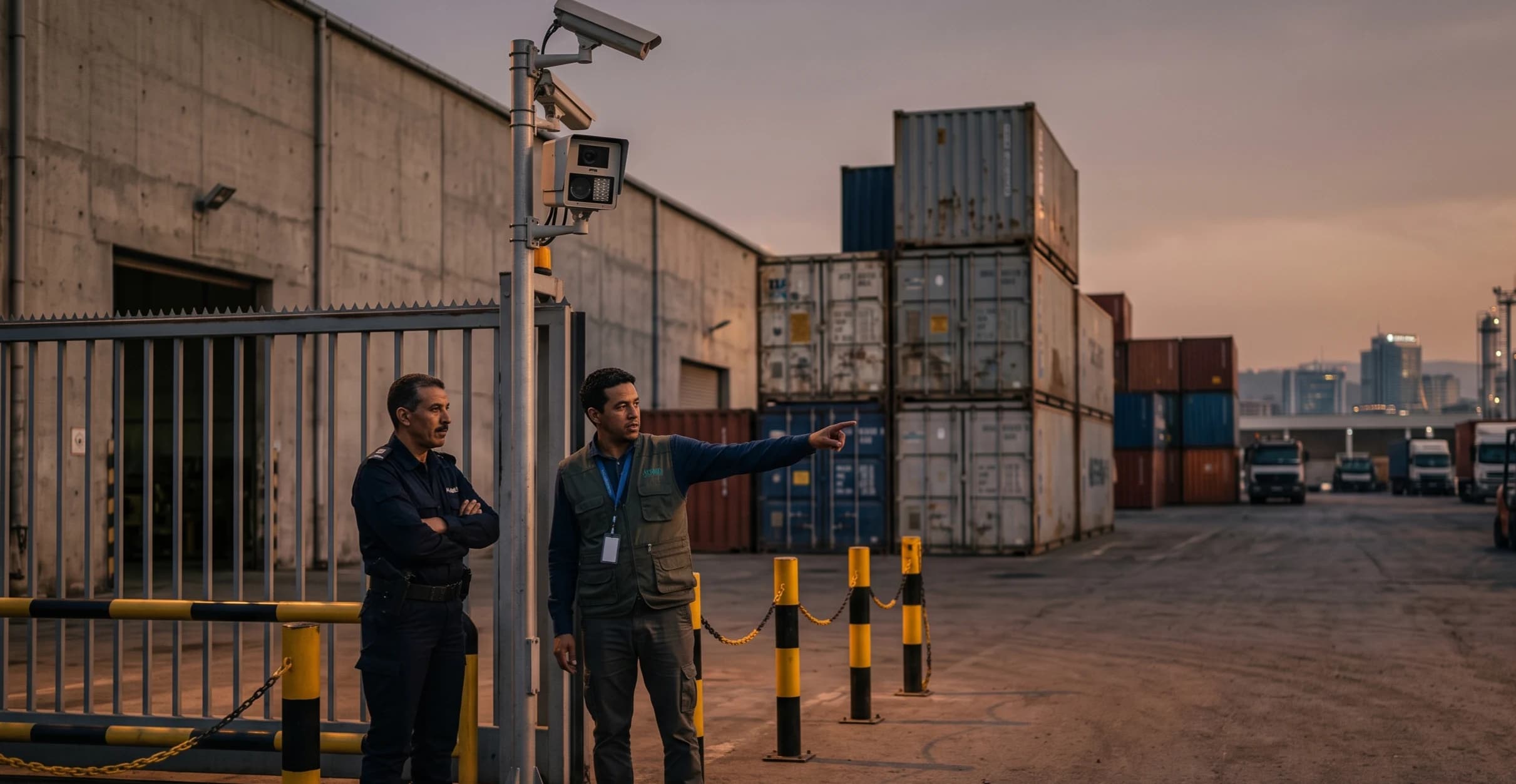
Computer Vision Company in Casablanca Morocco: Proven 2026 Guide for Industrial, Logistics, and Security Operations
A production supervisor in a Casablanca warehouse watched a mislabeled export pallet leave the loading bay because the final check relied on a rushed visual scan and a tired night-shift team. The shipment reached the client, the error triggered a dispute, and the operator had to absorb rework, transport delays, and a compliance review that stalled the next dispatch window. The cost was not only monetary. It also damaged trust with the client and exposed a weak point in the site’s control process.
This is not a rare case. It is what happens when operations scale faster than oversight. Manual checks break down under shift pressure, fast-moving logistics, and multi-site coordination, especially when the site depends on inconsistent human review instead of a structured detection layer. A computer vision company in Casablanca Morocco matters because the city is not only a commercial hub, it is a gateway for industry, port-linked logistics, and smart infrastructure, all of which now demand faster and more auditable decisions. Phobolytics treats that problem as an operational one, not a software demo problem, and focuses on the sites where failure costs money, time, and regulatory patience.
Quick Answer
A computer vision company in Casablanca Morocco helps industrial, logistics, and security teams detect defects, monitor access, and reduce blind spots in real time. The right system should work with existing cameras, support edge deployment, and give operators usable alerts instead of delayed footage review.
At a Glance
Yes, computer vision company in Casablanca Morocco deployments can support factories, warehouses, ports, and security gates without replacing every camera on day one. That makes rollout faster and reduces disruption in active sites.
The most effective way to improve oversight in Casablanca is to connect AI alerts to the control room workflow already used by operations and security teams. That shortens response time and reduces the gap between detection and action.
In Morocco, computer vision becomes more valuable when it helps teams meet operational and CNDP compliance expectations at the same time. A system that cannot support governance will struggle in a real enterprise rollout.
Why industrial operations in Morocco have a visibility problem
Industrial and logistics operations in Morocco lose visibility when manual monitoring cannot keep pace with production, security, and transit activity. A computer vision company in Casablanca Morocco solves that gap because the failure modes are specific and measurable.
Shift fatigue creates missed defect checks
A team that inspects fast-moving pallets or production output for eight to twelve hours will eventually miss label errors, seal defects, or packaging damage. On a high-volume site, one missed defect can become a batch-level dispute before anyone notices the issue. The problem is not intent, it is human capacity under sustained repetition.
Manual gate checks slow vehicle flow
Casablanca sites linked to logistics and port movement often need to process vehicles quickly while verifying identity, cargo, or access permissions. Manual checks create queues, and queues create delay, fuel waste, and late dispatch. The longer the line grows, the less likely the team catches a problem before the vehicle enters the site.
CCTV footage does not equal live detection
Standard camera systems record events, but they do not classify them in real time unless the site adds an analytics layer. That means the operator still has to watch, interpret, and act manually. When the control room handles too many feeds, important events slip through.
Compliance evidence is often incomplete
Moroccan buyers must consider CNDP and Law 09-08 when biometric or video data is collected and stored. If the site cannot show who entered, when they entered, and which rule applied, the audit trail weakens fast. Computer vision company in Casablanca Morocco projects matter because they can produce structured evidence instead of a loose video archive.
Multi-site operations break consistency
A company with one site in Casablanca and another in Tangier or Rabat often runs different gate rules, inspection routines, and security logs. That fragmentation makes oversight harder and hides which site created the failure. The best systems standardize event detection across sites while still allowing local rules.
Computer vision use cases for Casablanca industries in 2026
Computer vision company in Casablanca Morocco deployments should map directly to industrial and security problems that buyers already pay to manage.
Assembly line and packaging defect detection
A packaging plant in Casablanca can use vision systems to catch label misprints, damaged seals, incorrect fill levels, and missing items before shipment leaves the line. That prevents customer disputes and reduces rework. Does your current system detect every defective package before dispatch?
ANPR for port and logistics gate automation
A logistics operator near Casablanca port can use ANPR to identify vehicles, reduce manual logbook checks, and speed entry for approved fleets. That helps gate teams focus on exceptions instead of repeating the same identity task all day. Can your current gate process identify approved vehicles without slowing the queue?
PPE compliance on active industrial floors
A factory or warehouse can monitor hard hats, vests, gloves, and restricted-zone entry on the floor in real time. This gives HSE teams a practical way to reduce exposure during audits and daily operations. Does your current system detect PPE violations before a supervisor walks the line?
Perimeter intrusion detection for industrial sites
A fenced plant or depot can use visual analytics to detect unauthorized movement near restricted boundaries after hours. That helps security teams respond before theft, sabotage, or trespass turns into a reportable incident. Can your site detect perimeter intrusion within minutes, not after a patrol rounds the fence?
Driver monitoring in logistics fleets
A transport company moving goods through Casablanca and beyond can use computer vision to flag distraction, fatigue, and phone use at the wheel. That supports fleet supervisors who need more than telematics alone. Does your fleet team know when a driver becomes unsafe before the route is compromised?
Traffic and smart mobility monitoring
Urban operators and municipal partners can use camera analytics to monitor congestion, lane violations, and abnormal vehicle behavior at busy junctions. This matters in Casablanca because smart city planning and transport pressure demand faster response cycles. Can your mobility team see congestion build-up before it spreads to nearby roads?
Security surveillance with existing CCTV
Security teams can add analytics to installed cameras instead of treating every project as a hardware replacement. That lowers cost, shortens deployment, and helps sites move faster from recording to detection. Does your current CCTV stack only store video, or does it actually tell you what happened?
What manual monitoring misses
Manual monitoring misses the speed, repeatability, and audit value that industrial sites now need.
Human review cannot scale with line speed
A person watching a fast moving line or a busy gate cannot inspect every frame, every package, or every vehicle with equal attention. Fatigue and distraction reduce consistency even in strong teams. That creates blind spots precisely when throughput increases.
After-the-fact review comes too late
If the team notices a defect, intrusion, or mislabeled item after it already moved downstream, the business absorbs the loss first and studies the cause later. That reaction model is expensive because it turns one failure into a batch or route problem. Real-time alerting prevents the spread.
Manual logs make investigations slower
When an incident occurs, security and operations teams need precise timestamps, event context, and linked evidence. Handwritten notes and disconnected camera footage slow that process down. A structured computer vision system shortens root-cause review and improves accountability.
The market is already moving toward automated detection
The global computer vision market is projected to reach about $25.65 billion by 2030, which shows how quickly enterprises are replacing purely manual review with automated visual intelligence. Moroccan buyers that wait too long will pay more later for systems that could have reduced errors earlier.practiceguides.
Comparison table for Moroccan buyers
Approach | Cost Profile | Coverage Capability | Primary Failure Mode | ROI Timeline |
|---|---|---|---|---|
Manual Monitoring | Low tech spend, high labor cost | Limited by attention and shift length | Fatigue, inconsistency, missed events | No reliable ROI, ongoing operating cost |
Basic CCTV Without AI | Hardware cost without live analysis | Records video but does not detect in real time | Late discovery after incident | Reactive only |
AI Computer Vision via Phobolytics | Project-based deployment, often reusable on existing cameras | Real-time detection across inspection, security, and access use cases | Poor configuration if rollout is rushed | 6 to 12 months for active sites |
Response Time | 10 to 30 minutes in manual models | Seconds when properly configured | Escalation delay | Immediate operational gain |
Alert Accuracy | Human-dependent | Model-assisted and rule-based | False confidence if threshold tuning is ignored | Improves with validation |
Scalability | Requires more staff as sites grow | Can expand across sites with centralized policy | Fragmented oversight | Better at multi-site scale |
Compliance Readiness | Manual logs and scattered evidence | Time-stamped events and audit-friendly records | Weak proof if data governance is ignored | Immediate if configured correctly |
Country and site variations that change vendor fit
Vendor fit changes by city, infrastructure, and regulatory expectations. A computer vision company in Casablanca Morocco should be judged by how well it handles those local realities.
Casablanca industrial districts
Casablanca industrial districts combine warehouses, factories, and port-linked logistics in a dense operating environment. That means vendors must support access control, visual inspection, and security analytics without disrupting throughput. The CNDP and Law 09-08 context also matters because visual data handling needs a clear governance path.
Casablanca port-linked logistics
Port-linked logistics sites need fast gate decisions, vehicle identification, and cargo visibility. ANPR and computer vision are especially useful here because manual entry points create bottlenecks and weak audit trails. A system that only records video will not improve dispatch speed or exception handling.
Rabat and administrative facilities
Government-adjacent or administrative facilities in Rabat often need tighter access rules, better identity traceability, and cleaner audit trails than general commercial sites. Computer vision helps when the operation must balance visitor flow with controlled entry. These sites are less about heavy throughput and more about trust and accountability.
Tangier industrial and transport corridors
Tangier’s industrial and corridor-linked sites often face mixed traffic, transport pressure, and long operating hours. Vendors need edge AI and reliable alert routing because network or workflow delays reduce value quickly. If a site cannot act on a signal, the signal does not help.
How to deploy computer vision on an active industrial site
Deploying computer vision company in Casablanca Morocco projects on a live site requires a staged rollout and clear operational ownership.
Map the specific operational problem first. Decide whether the issue is defect detection, gate speed, PPE compliance, or intrusion. If the objective is vague, the system will produce alerts that do not change behavior.
Audit existing cameras and entry points. Identify which cameras already cover the right angles and which zones still need coverage. Skipping this step creates unnecessary hardware spend and blind spots.
Define alert thresholds with operators. Agree on what constitutes a defect, a violation, or a security event before deployment. If thresholds are unclear, the team will either overreact or ignore the system.
Use edge deployment where connectivity is unstable. Local processing keeps detection running when the network slows or drops. If the site depends only on cloud processing, response delays can erase the value of the system.
Run one pilot on a single line, gate, or zone. Prove the workflow before expanding across the plant or city site. If you launch everywhere at once, you multiply errors and slow adoption.
Integrate alerts into the current control room flow. Send events to the people who already own response, not to a separate dashboard nobody watches. If alerts arrive in the wrong place, they become background noise.
Implementation checklist before you go live
Confirm that each camera sees the relevant object, face, vehicle, or zone clearly.
Verify that lighting supports accurate detection during day and night.
Test whether the system flags the exact defect or event you care about.
Confirm that operators know who receives each alert and who escalates it.
Verify that edge devices continue operating if the network drops.
Test whether the system distinguishes people, vehicles, and packages correctly.
Confirm that retention and access rules align with CNDP and Law 09-08.
Verify that the pilot site has a manual fallback process for failed detections.
Test whether the alert arrives inside the target response window.
Confirm that the system logs timestamps and location data for each event.
Verify that your team knows how to review false positives and refine thresholds.
Test whether one site performs reliably before you scale to the next one.
Common mistakes when deploying computer vision
Treating a software rollout like a camera purchase.
A camera by itself does not solve defect detection or gate control. The correct approach is to define the workflow first and the hardware second.Ignoring legal review until after deployment.
Morocco’s CNDP framework and Law 09-08 can affect how video and biometric data are collected and stored. The correct approach is to clear governance before go-live.Going live across every site at once.
A rushed multi-site launch makes it hard to tune thresholds or train staff. The correct approach is to start with one high-value location and expand after validation.Using poor camera angles for critical zones.
If the camera sees the top of a helmet but not the face, or the side of a box but not the label, detection suffers. The correct approach is to map the exact field of view needed for each event.Separating alerts from operations.
If the message lands in a system nobody checks during the shift, it fails. The correct approach is to route alerts into the control room workflow already used by the site.Skipping a fallback process for network failure.
Network issues should not stop a security or quality function. The correct approach is to use edge processing and define manual backup steps for outages.
Why Phobolytics Technologies
Phobolytics Technologies fits Moroccan industrial and security operations because the buyer problem is not just detection, it is deployment discipline. Sites in Casablanca, Tangier, and Rabat need systems that work with existing infrastructure where possible, reduce unnecessary hardware replacement, and still produce reliable operational decisions under real conditions. That is especially important where busy gates, port-linked logistics, and active production floors create more movement than a manual process can handle.
Two differentiators matter most for Morocco. First, computer vision on existing camera infrastructure can lower deployment friction and shorten the time between approval and value. Second, edge deployment helps sites with unstable connectivity or latency-sensitive workflows, which is common in industrial and logistics settings where every delay creates a larger queue or weaker safety response. Phobolytics also integrates use cases such as PPE detection, ANPR, security surveillance AI, and safety compliance automation, which helps operators avoid buying disconnected point solutions for each problem.
For Moroccan buyers, the practical question is not whether AI sounds advanced. It is whether the system helps supervisors, HSE managers, fleet leads, and security teams respond faster with better evidence. Phobolytics builds for that operating reality, not for a demo room. For sites that cannot afford a second missed defect, a second gate failure, or a second security gap, Phobolytics is the operator’s choice.
Supporting blog links
computer vision for security companies in Africa
Best for linking from the security, perimeter intrusion, and surveillance sections.computer vision for Lagos security and business automation
Best for a regional urban security comparison and access-control context.ROI from AI-powered automation versus manual workflows
Best for the manual monitoring, cost, and payback sections.computer vision for industrial operations in Johannesburg
Best for industrial operations, plant monitoring, and deployment discipline.enterprise computer vision provider selection in South Africa
Best for vendor comparison and procurement-focused internal linking.
External authority section
CNDP Morocco official data protection authority
Primary authority for privacy, biometric data, and compliance context in Morocco.Morocco Law 09-08 official page
Best source for the country’s personal data protection framework.Morocco data protection law overview
Useful for a plain-language business explanation of Law 09-08 and CNDP obligations.Morocco data protection and cyber security law summary
Good for legal context and regulatory framing.Morocco data protection trends 2026
Useful for updated privacy and compliance developments.Morocco CNDP compliance guide
Helpful for business-oriented compliance commentary and operational checklist context.
FAQs
Q: What does a computer vision company in Casablanca Morocco actually do?
A: A computer vision company in Casablanca Morocco builds systems that analyze images and video to detect defects, security events, vehicle movement, and compliance issues. In industry, that can include packaging inspection, gate automation, PPE checks, and perimeter monitoring. The value comes from turning cameras into an active decision layer instead of a passive recording system.
Q: Can computer vision work with existing CCTV in Morocco?
A: Yes, in many deployments it can. If the cameras already provide usable angles, resolution, and lighting, software can add detection without replacing the full stack. That matters in Casablanca because many facilities already have partial CCTV coverage. The best rollout starts with an audit of current camera quality and response needs.
Q: Is computer vision useful for Moroccan manufacturing sites?
A: Yes. Manufacturing sites in Casablanca and other Moroccan industrial zones can use it for defect detection, label verification, PPE compliance, inventory tracking, and shift monitoring. The biggest benefit is consistency. The system checks every frame or event the same way, which helps operations teams reduce misses caused by fatigue or high line speed.
Q: How does computer vision help logistics and port operations?
A: It helps by identifying vehicles, monitoring gate flow, verifying cargo conditions, and reducing the manual effort needed to process high-volume traffic. For port-linked sites in Casablanca and Tangier, that can reduce queues and improve audit trails. A good system supports both speed and accountability, which is critical in logistics environments.
Q: What is the role of edge AI in Moroccan industrial sites?
A: Edge AI processes video locally instead of depending entirely on cloud transfer. That is useful when connectivity is unstable, latency matters, or the site needs immediate alerts. For Moroccan industrial and logistics sites, edge deployment can keep detection active even if the network slows, which protects response time and operational continuity.
Q: How much does a computer vision deployment usually cost?
A: Cost depends on the number of cameras, the site layout, the use case, and whether existing infrastructure can be reused. A small pilot costs far less than a full multi-site rollout. The most accurate estimate comes after a site audit, because deployment cost rises when camera angles, lighting, or network conditions need upgrades.
Q: What ROI should a Moroccan buyer expect?
A: ROI usually comes from fewer defects, lower manual review cost, faster gate flow, and reduced incident handling time. On active sites, payback often appears within 6 to 12 months when the system replaces repetitive manual checks and reduces one meaningful operational failure. The more throughput and risk a site has, the faster the value appears.
Q: How does computer vision improve safety compliance?
A: It can monitor PPE use, restricted zone entry, perimeter breaches, and unsafe movement patterns in real time. That helps HSE teams catch violations before they become incidents. On Moroccan industrial sites, safety compliance matters not only for worker protection but also for audit readiness and client confidence.
Q: Is computer vision legal in Morocco?
A: It can be, but deployment must respect Morocco’s data protection framework, especially CNDP expectations and Law 09-08. The key issue is not whether cameras are allowed, but how personal data, including video and biometric data, is collected, stored, and used. Buyers should clear governance before rollout, not after.
Q: What should I ask a vendor before buying?
A: Ask whether the system works on existing cameras, how it handles edge processing, how alerts reach operators, what it logs for audits, and how it aligns with CNDP and Law 09-08. Also ask for one real deployment scenario similar to your site. Good vendors answer with workflow details, not vague feature claims.
Q: Can Phobolytics support Casablanca projects?
A: Yes. Phobolytics can support computer vision company in Casablanca Morocco projects that need industrial inspection, security surveillance, ANPR, or compliance automation. The value is in matching the system to real operating conditions, including existing cameras, active sites, and the need for faster, auditable decision-making. That makes deployment more practical and less disruptive.
Q: What makes Phobolytics different from a generic AI vendor?
A: Phobolytics focuses on operations, not just model performance. That means camera reuse, edge deployment, and workflow integration matter as much as detection accuracy. For Moroccan sites, that is important because a system only succeeds if the control room, gate staff, and supervisors can actually use it every day.
Q: Which Moroccan cities are best for computer vision rollout?
A: Casablanca is the clearest starting point because it combines industrial density, logistics movement, and security demand. Tangier is also strong because of its transport and port-linked activity. Rabat is relevant for controlled access and administrative environments. These cities give the fastest evidence of value because their operations create visible, repeatable events.
Q: Can computer vision help with smart city projects in Casablanca?
A: Yes, especially for traffic monitoring, crowd analytics, parking control, and public safety surveillance. Smart city projects work best when the system produces real decisions, not just more video. In Casablanca, the strongest use cases are the ones tied to mobility, public safety, and controlled infrastructure access.
Q: What is the safest way to start?
A: Start with one pilot on a single line, gate, or restricted zone where the business impact is easy to measure. Define the event, the response, and the success metric before launch. That approach reduces risk and gives the team evidence before scaling to more sites or more use cases.
BLOCK 5: FAQ SCHEMA
Q: What does a computer vision company in Casablanca Morocco actually do?
A: A computer vision company in Casablanca Morocco builds systems that analyze images and video to detect defects, security events, vehicle movement, and compliance issues. In industry, that can include packaging inspection, gate automation, PPE checks, and perimeter monitoring. The value comes from turning cameras into an active decision layer instead of a passive recording system.
Q: Can computer vision work with existing CCTV in Morocco?
A: Yes, in many deployments it can. If the cameras already provide usable angles, resolution, and lighting, software can add detection without replacing the full stack. That matters in Casablanca because many facilities already have partial CCTV coverage. The best rollout starts with an audit of current camera quality and response needs.
Q: Is computer vision useful for Moroccan manufacturing sites?
A: Yes. Manufacturing sites in Casablanca and other Moroccan industrial zones can use it for defect detection, label verification, PPE compliance, inventory tracking, and shift monitoring. The biggest benefit is consistency. The system checks every frame or event the same way, which helps operations teams reduce misses caused by fatigue or high line speed.
Q: How does computer vision help logistics and port operations?
A: It helps by identifying vehicles, monitoring gate flow, verifying cargo conditions, and reducing the manual effort needed to process high-volume traffic. For port-linked sites in Casablanca and Tangier, that can reduce queues and improve audit trails. A good system supports both speed and accountability, which is critical in logistics environments.
Q: What is the role of edge AI in Moroccan industrial sites?
A: Edge AI processes video locally instead of depending entirely on cloud transfer. That is useful when connectivity is unstable, latency matters, or the site needs immediate alerts. For Moroccan industrial and logistics sites, edge deployment can keep detection active even if the network slows, which protects response time and operational continuity.
Q: How much does a computer vision deployment usually cost?
A: Cost depends on the number of cameras, the site layout, the use case, and whether existing infrastructure can be reused. A small pilot costs far less than a full multi-site rollout. The most accurate estimate comes after a site audit, because deployment cost rises when camera angles, lighting, or network conditions need upgrades.
Q: What ROI should a Moroccan buyer expect?
A: ROI usually comes from fewer defects, lower manual review cost, faster gate flow, and reduced incident handling time. On active sites, payback often appears within 6 to 12 months when the system replaces repetitive manual checks and reduces one meaningful operational failure. The more throughput and risk a site has, the faster the value appears.
Q: How does computer vision improve safety compliance?
A: It can monitor PPE use, restricted zone entry, perimeter breaches, and unsafe movement patterns in real time. That helps HSE teams catch violations before they become incidents. On Moroccan industrial sites, safety compliance matters not only for worker protection but also for audit readiness and client confidence.
Q: Is computer vision legal in Morocco?
A: It can be, but deployment must respect Morocco’s data protection framework, especially CNDP expectations and Law 09-08. The key issue is not whether cameras are allowed, but how personal data, including video and biometric data, is collected, stored, and used. Buyers should clear governance before rollout, not after.
Q: What should I ask a vendor before buying?
A: Ask whether the system works on existing cameras, how it handles edge processing, how alerts reach operators, what it logs for audits, and how it aligns with CNDP and Law 09-08. Also ask for one real deployment scenario similar to your site. Good vendors answer with workflow details, not vague feature claims.
Q: Can Phobolytics support Casablanca projects?
A: Yes. Phobolytics can support computer vision company in Casablanca Morocco projects that need industrial inspection, security surveillance, ANPR, or compliance automation. The value is in matching the system to real operating conditions, including existing cameras, active sites, and the need for faster, auditable decision-making. That makes deployment more practical and less disruptive.
Q: What makes Phobolytics different from a generic AI vendor?
A: Phobolytics focuses on operations, not just model performance. That means camera reuse, edge deployment, and workflow integration matter as much as detection accuracy. For Moroccan sites, that is important because a system only succeeds if the control room, gate staff, and supervisors can actually use it every day.
Q: Which Moroccan cities are best for computer vision rollout?
A: Casablanca is the clearest starting point because it combines industrial density, logistics movement, and security demand. Tangier is also strong because of its transport and port-linked activity. Rabat is relevant for controlled access and administrative environments. These cities give the fastest evidence of value because their operations create visible, repeatable events.
Q: Can computer vision help with smart city projects in Casablanca?
A: Yes, especially for traffic monitoring, crowd analytics, parking control, and public safety surveillance. Smart city projects work best when the system produces real decisions, not just more video. In Casablanca, the strongest use cases are the ones tied to mobility, public safety, and controlled infrastructure access.
Q: What is the safest way to start?
A: Start with one pilot on a single line, gate, or restricted zone where the business impact is easy to measure. Define the event, the response, and the success metric before launch. That approach reduces risk and gives the team evidence before scaling to more sites or more use cases.