
Voice Cloning AI in India: Why Your Voice is the Next Data Goldmine (And How to Protect It)
Date: February 15, 2026 | Category: AI Security & Privacy | Read Time: 11 Minutes
Three seconds. That's all a scammer needs to clone your voice in 2026.
Not a recording studio session. Not a professional sample. Just three seconds of you speaking—maybe from an Instagram Reel, a YouTube comment, or even a voice note you sent to a friend—and AI can replicate your voice so accurately that your own mother couldn't tell the difference.
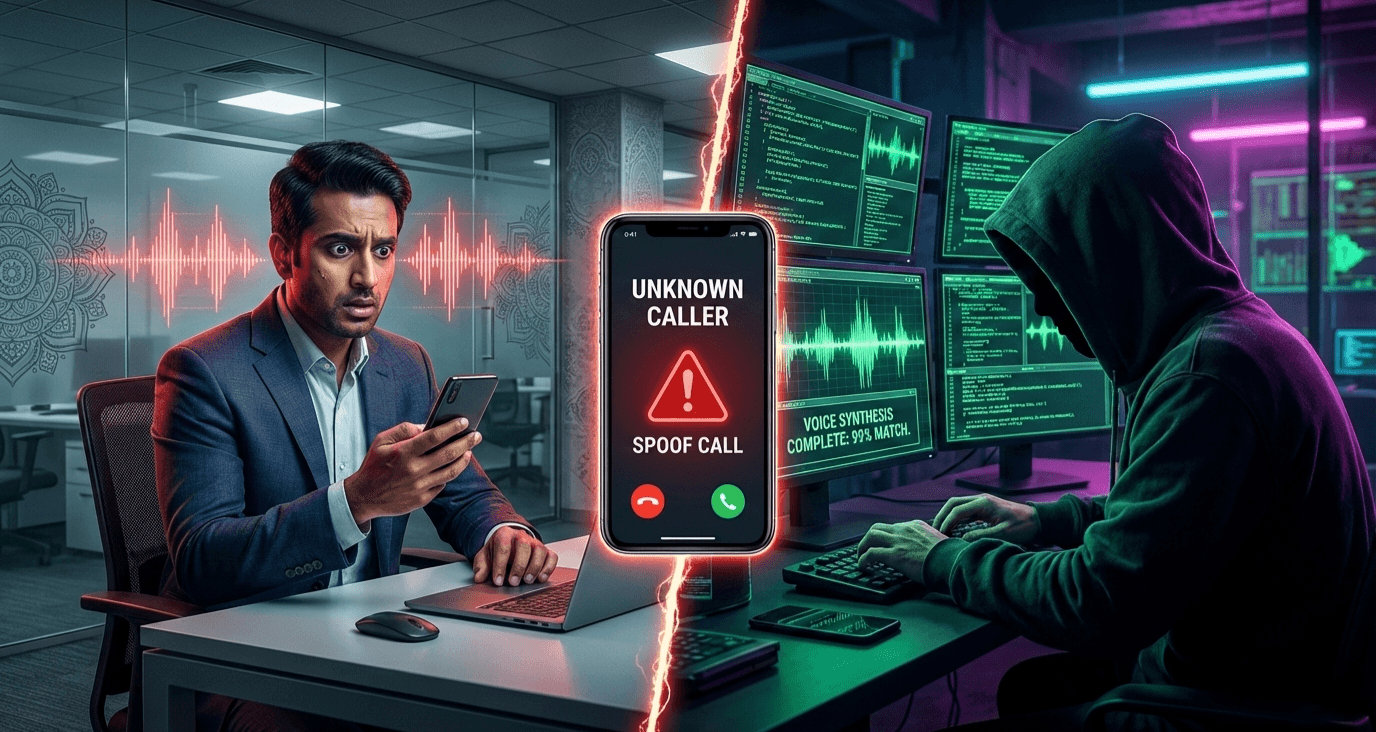
Last month in Mumbai, a CFO authorized a ₹2.3 crore wire transfer after receiving a "call from the CEO." The voice was perfect. The urgency was real. The money vanished in minutes. The CEO was in a meeting the whole time. It was AI.
Welcome to 2026, where your voice is now as valuable as your fingerprint—and far easier to steal.
The 3-Second Voice Scam That's Sweeping India
Voice cloning AI has quietly become one of the fastest-growing technologies in the world. According to Exploding Topics, text-to-audio AI has grown 6,400% in the last 5 years, with tools becoming so accessible that anyone with a laptop can clone a voice in under 10 minutes.
Here's how the scam works in India:
The "Family Emergency" Script
Scammers scrape your voice from social media (Instagram Stories, YouTube videos, LinkedIn clips)
They use free AI tools (like ElevenLabs or locally built clones) to generate a panicked voice message
They call your parents/spouse: "Mom, I'm in trouble. I need ₹50,000 right now. I'll explain later."
The voice sounds exactly like you. The emotion is real. They transfer the money immediately.
The "Corporate Approval" Con
Scammers clone a CEO or senior executive's voice from earnings calls or YouTube interviews
They call the finance team with urgent "wire transfer instructions"
The urgency bypasses normal verification protocols
Money disappears before anyone realizes it was a deepfake
According to Haryana Cyber Cell, over 2,300 voice cloning fraud cases were reported in India in Q4 2025 alone—a 450% increase from the previous year.
What is Voice Cloning AI and Why It's Exploding in 2026
Voice cloning (also called voice synthesis or text-to-audio AI) uses deep learning to replicate human speech patterns, accents, tone, and emotional inflections.
How It Works (Simplified):
Training Data: The AI analyzes a sample of your voice (even just 3-10 seconds)
Pattern Extraction: It maps your unique vocal characteristics (pitch, rhythm, pronunciation)
Synthesis: It generates new speech in your voice from any text input
Emotional Layering: Advanced models add emotion (urgency, fear, excitement) to make it believable
Why 2026 is the Breakthrough Year:
Compute Costs Dropped: What required $50,000 in cloud compute in 2023 now costs $5
Open-Source Models: Tools like Coqui TTS and Tortoise are free and GitHub-available
Multilingual Support: AI can now clone voices in Hindi, Tamil, Bengali, Marathi—not just English
Real-Time Cloning: You can now have a live phone conversation where AI changes your voice in real-time
Real Cases: When AI Voice Fraud Hit India
Case 1: The Bangalore CEO Scam (January 2026)
A Bangalore-based fintech startup lost ₹2.3 crore when their CFO received a WhatsApp call from "the CEO" asking for an urgent international wire transfer. The voice, tone, and even the CEO's habit of saying "bloody hell" were perfect. The call was AI-generated using 30 seconds of audio scraped from a podcast interview.
Case 2: The "Kidnapped Son" Scam (Delhi, December 2025)
A retired government official transferred ₹10 lakhs after receiving a call from his "son" claiming he'd been kidnapped. The voice was cloned from the son's LinkedIn video introduction. Police confirmed the son was at work the entire time.
Case 3: The Political Deepfake (February 2026)
An opposition leader's voice was cloned to create a fake audio clip making inflammatory statements. The clip went viral on WhatsApp before being debunked. The damage to reputation was already done.
How Voice Cloning Technology Actually Works
Let's get technical (but keep it simple):
Stage 1: Data Collection
The AI needs a "voice sample." In 2023, this required 10-20 minutes of high-quality audio. In 2026, 3-5 seconds is enough for consumer-grade cloning.
Where Scammers Get Your Voice:
YouTube videos
Instagram Reels/Stories
LinkedIn video posts
Podcast appearances
Customer service call recordings
Voice notes shared in WhatsApp groups
Stage 2: Model Training
The AI (typically a neural network like WaveNet or Tacotron) learns:
Your unique vocal frequency (pitch)
Speech patterns (how you pause, emphasize words)
Accent and pronunciation quirks
Emotional range
Stage 3: Synthesis
You type any text. The AI generates audio in your voice. Advanced models can even add context-appropriate emotions (urgency for "I need help!" or joy for "We got the deal!").
The Business Threat: CEO Fraud and Corporate Espionage
For businesses, voice cloning AI isn't just a consumer scam—it's a corporate security crisis.
The "Deepfake Authorization" Attack
Scenario: A scammer clones the voice of your company's CEO or CFO. They call the finance team during a busy quarter-end with "urgent payment instructions."
Why It Works:
Finance teams are trained to obey senior executives
The voice sounds identical
Urgency bypasses verification protocols
Real Impact: Global losses from CEO fraud (voice + email combined) exceeded $2.4 billion in 2025, with India accounting for 8% of cases.
The Competitive Intelligence Risk
Imagine a competitor cloning your sales team's voices to impersonate them on client calls, stealing deals or damaging relationships.
Computer Vision + Voice: The Next Attack Vector
Here's where it gets terrifying (and where Phobolytics' expertise becomes critical):
Scammers are now combining voice cloning with deepfake video to create fully synthetic video calls.
The "Live Video Call" Scam
Voice Cloning: AI replicates your voice
Deepfake Video: AI maps your face (from Instagram/LinkedIn) onto a live video feed
Real-Time Synthesis: The scammer video-calls your colleague, and they see "you" speaking in "your voice"
This isn't science fiction. ByteDance's Seedance 2.0 and similar tools have made real-time video synthesis consumer-accessible.
For businesses: This means Zoom/Teams calls can no longer be trusted as identity verification.
How to Protect Yourself (The 2026 Defense Playbook)
For Individuals:
Create a "Family Code Word": Agree on a secret word with family that only they know. If someone calls claiming to be you, they must say the word.
Limit Voice Exposure: Be cautious about posting voice notes or videos publicly. Set Instagram/Facebook to private.
Verify Before Transferring Money: Always call back on a known number. Never trust caller ID (it can be spoofed).
Use Voice Biometric Locks: Enable voice authentication on banking apps, but pair it with multi-factor authentication.
For Businesses:
Implement "Callback Verification": Any financial request over ₹1 lakh requires a callback to a verified number—no exceptions.
Use "Watermarking" on Official Communications: Tools exist that embed invisible audio watermarks in legitimate recordings.
Train Teams on Deepfake Awareness: Regular workshops on identifying AI-generated content.
Deploy AI Detection Tools: Use tools that analyze audio for signs of synthesis (inconsistent breath patterns, unnatural pacing).
For Policymakers:
India needs a Digital Biometric Protection Act that treats voice and face data as sensitive biometric information, with criminal penalties for misuse.
What Phobolytics is Building to Combat This
At Phobolytics, we're at the intersection of Computer Vision and AI Security. Here's how we're helping:
1. Multimodal Deepfake Detection
We're developing systems that analyze video + audio + behavioral patterns simultaneously to detect synthetic media in real-time.
2. Voice Watermarking for Enterprises
We're building tools that embed invisible "signatures" into official voice communications, allowing verification of authenticity.
3. Secure Biometric Access Systems
Our face recognition ecosystems now include "liveness detection" that prevents deepfake videos from fooling security systems.
4. Public Awareness Campaigns
We're partnering with Indian cybersecurity agencies to educate SMBs on deepfake threats.
FAQ: Your Burning Questions About Voice Security
1. Can I tell if a voice is AI-generated?
Sometimes. Listen for: unnatural breathing, odd pacing, or "flat" emotional delivery. But 2026 models are 95%+ accurate—even experts struggle.
2. Is my voice already cloned without my knowledge?
If you have public social media with voice content, assume it's possible. Scammers scrape millions of profiles daily.
3. Are voice biometrics still safe for banking?
They're safer than passwords, but NOT foolproof. Always use multi-factor authentication (voice + OTP + fingerprint).
4. What should I do if I'm targeted by a voice scam?
Don't transfer money
Report to cybercrime.gov.in immediately
Warn your network (scammers often target multiple people)
Change security questions that rely on family information
5. Will regulation stop this?
Regulation helps, but technology moves faster than law. Personal vigilance + corporate protocols are your best defense.
Conclusion: The Voice You Save May Be Your Own
We've entered an era where seeing is no longer believing, and hearing is no longer proof.
Voice cloning AI isn't going away. It will only get better, faster, and cheaper. The question isn't "Will I be targeted?" It's "Am I prepared when I am?"
The next time you post a video online, remember: you're not just sharing content. You're sharing your vocal fingerprint.
Protect it like your Aadhaar. Because in 2026, it's just as valuable.
Is your business prepared for deepfake threats?
Schedule a Free Security Audit with Phobolytics. Let us assess your vulnerabilities and build defenses before you become the next headline.
Related Articles:
Sources:
Exploding Topics: Text-to-Audio AI Growth
Haryana Cyber Cell Deepfake Report
Computer Vision Trends 2026