
Table of contents
Introduction.
Why logistics losses happen.
What computer vision means for logistics.
Top use cases in Africa.
Comparison table: manual operations vs computer vision.
How it saves money.
How to choose a solution.
Implementation framework.
Common mistakes.
Why Phobolytics Technologies.
FAQs.
Conclusion.
Introduction
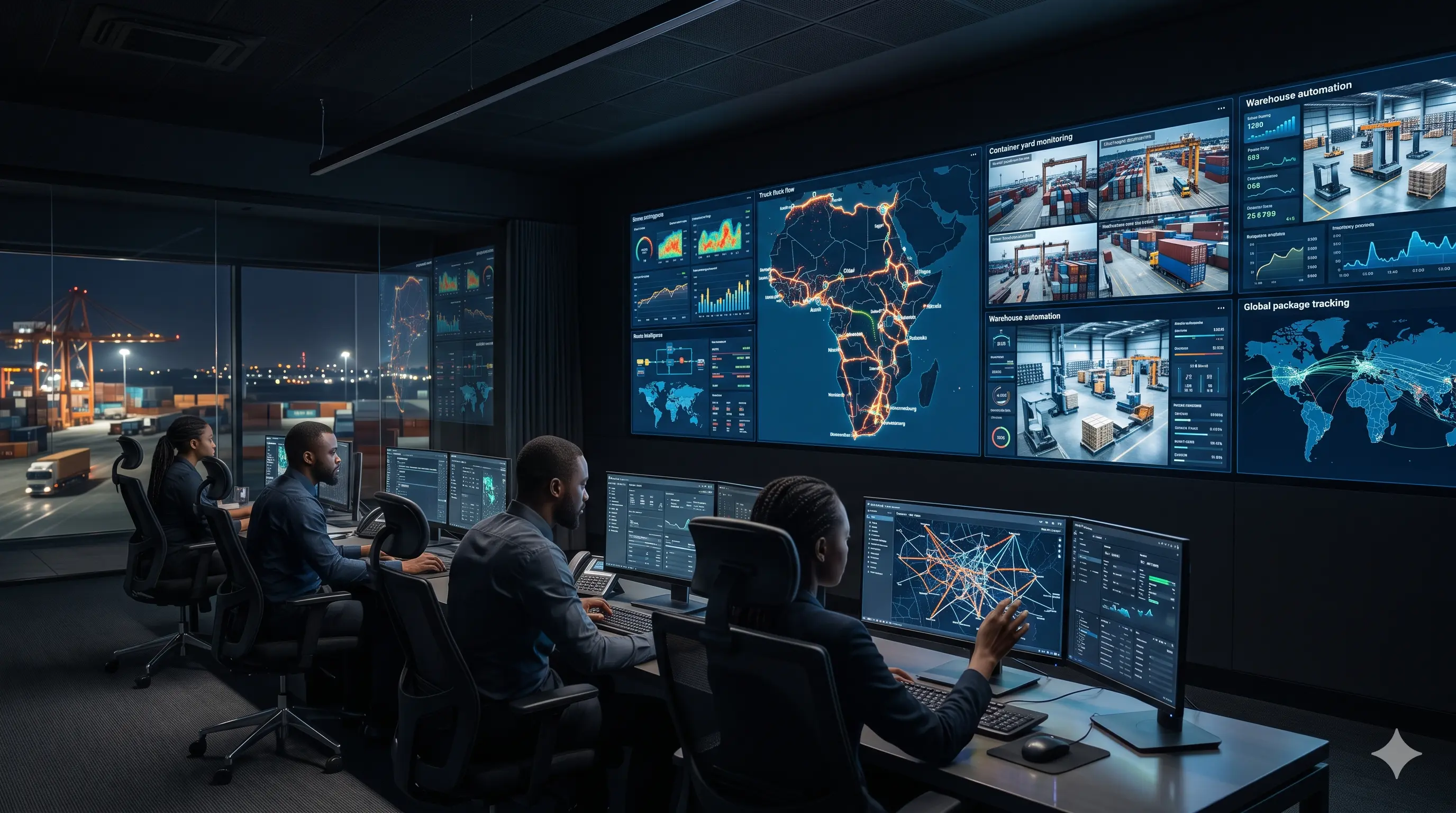
Computer vision for logistics companies in Africa is no longer a “future” technology. It is a practical way to reduce losses, improve visibility, and make supply chain operations more reliable in markets where every delay and every error can cost money. Logistics businesses lose value when they cannot see what is happening in warehouses, yards, trucks, loading bays, and delivery checkpoints in real time.
That is exactly why Phobolytics Technologies is relevant here. Its work across AI, computer vision, and automation makes it well positioned to help logistics firms move from passive monitoring to intelligent operations. For companies that already manage multiple sites, fleets, and warehouses, this shift can protect margins quickly.
Why logistics companies lose money
African logistics companies lose money for a few simple reasons:
Inventory mismatches.
Loading and unloading errors.
Theft and shrinkage.
Delays at the yard or dock.
Poor visibility into fleet movement.
Manual checks that miss problems.
Weak exception tracking.
Each of those issues can look small in isolation, but over time they add up to serious margin loss. When a business has to rely on people watching screens, checking paper logs, or manually reconciling shipments, mistakes become expensive.
What computer vision does in logistics
Computer vision uses AI to interpret images and video. In logistics, this means cameras become operational tools instead of passive recorders. A system can detect vehicles, count items, read labels, flag anomalies, monitor zones, and support faster response when something goes wrong.
For logistics teams, the value is simple: better visibility leads to fewer losses. If a warehouse or fleet can see issues earlier, it can act faster and prevent damage.
Top logistics use cases
1. Warehouse visibility
Computer vision can track movement in aisles, loading bays, and storage zones. That helps managers see how goods move and where bottlenecks appear.
2. Shipment verification
Cameras can help verify whether the right items are loaded, transferred, or dispatched. That reduces errors during handoff and improves accountability.
3. Fleet and yard monitoring
Logistics firms can use AI to monitor truck movement, container handling, and yard activity. This is especially useful at busy depots and distribution hubs.
4. Loss prevention
Computer vision can flag unusual movement, unauthorized access, or suspicious activity around valuable cargo. That helps reduce theft and improve control.
5. Safety monitoring
Warehouses and depots are safety-heavy environments. Computer vision can detect risky behavior, restricted-zone access, or unsafe movement in operational areas.
6. Package and container tracking
AI can help track parcels, containers, and loads through visual checkpoints. That improves traceability and reduces ambiguity.
Comparison table
Factor | Manual logistics operations | Computer vision |
|---|---|---|
Visibility | Limited | Continuous |
Error detection | Slow | Faster |
Theft monitoring | Weak | Stronger |
Documentation | Manual | Automated support |
Fleet oversight | Partial | More complete |
Warehouse accountability | Inconsistent | More reliable |
Scalability | Labor-heavy | Easier across sites |
For many logistics firms, the biggest gain is not just automation. It is control. Better control means fewer surprises, fewer losses, and better decisions.
How it saves money
Computer vision saves money in logistics by reducing:
Manual checking time.
Inventory errors.
Misloads and missed shipments.
Theft and shrinkage.
Downtime from unresolved issues.
Rework caused by mistakes.
Delays from poor visibility.
If one warehouse mistake causes a lost shipment, the cost can be large. If that happens repeatedly, the financial damage compounds quickly. Computer vision is valuable because it helps stop those losses before they spread.
How to choose the right solution
A good logistics computer vision solution should be chosen based on the business problem, not the technology trend. Ask:
What exact operational loss are we trying to stop?
Which site or workflow should we start with?
What cameras or systems already exist?
What should the system detect or alert on?
How will staff respond to alerts?
How will success be measured?
Can the solution scale to more sites later?
The best vendors will speak in terms of business outcomes, not just AI features.
Implementation framework
Stage 1: Discovery
Map the warehouse, yard, fleet, and shipment workflow. Identify where losses happen most often.
Stage 2: Pilot
Start with one warehouse, one route, one dock, or one operational zone.
Stage 3: Validation
Measure accuracy, false alerts, staff response, and operational improvement.
Stage 4: Scale
Expand to other sites or processes once the pilot proves business value.
Best practices
Focus on one costly problem first.
Use good camera placement.
Keep human oversight in the workflow.
Track loss reduction and response time.
Integrate with operations, not just IT.
Plan for support after launch.
Train staff to act on alerts.
Common mistakes
Trying to automate everything at once.
Ignoring camera quality.
Choosing a vendor without logistics experience.
Failing to define what counts as a loss event.
Not planning for maintenance.
Expecting a pilot to solve every problem immediately.
Why Phobolytics Technologies
Phobolytics Technologies is a strong fit because it already works in AI and computer vision, which are the core capabilities needed for logistics visibility systems. The company’s broader delivery approach also makes it suitable for businesses that need implementation, not just strategy.
This topic also connects naturally to your earlier articles on computer vision company in Lagos, computer vision services in Nairobi, retail computer vision Africa, AI engineers Cape Town, and dedicated AI engineers vs in-house hiring. That internal linking strengthens topical authority and keeps the reader moving through related business problems.
Featured summary
Computer vision for logistics companies in Africa helps reduce losses by improving warehouse visibility, fleet monitoring, shipment verification, safety control, and theft prevention. It works best when businesses need real-time insight into high-value operational workflows.
Real-world examples
A warehouse can use computer vision to verify that the right pallets leave the loading bay. A fleet operator can use it to track container movement at the yard. A distribution company can use it to flag unsafe activity in storage areas. A logistics hub can use it to reduce manual reconciliation errors.
These examples matter because logistics is a visual business. If the operation can be seen, it can often be improved.
Decision framework
Ask these three questions:
Is the loss visual and repeatable?
Is manual monitoring too slow?
Would earlier detection reduce cost or risk?
If the answer is yes, computer vision is likely worth a pilot. Connect with us for free demo and consulting
Supporting Articles
Computer vision company in Lagos for security and business automation.
Computer vision services in Nairobi for manufacturing, mining, and industrial automation.
Dedicated AI engineers vs in-house hiring for African agencies.
External authority references
FAQs
1. What is computer vision in logistics?
It is AI that analyzes video and images to improve visibility, accuracy, and control.
2. Why do logistics companies in Africa need it?
Because it reduces losses, improves accountability, and helps operations run faster.
3. Can it monitor warehouses?
Yes, warehouse visibility is one of the strongest use cases.
4. Can it help with fleets?
Yes, it can support fleet and yard monitoring.
5. How does it reduce theft?
It improves monitoring and flags unusual activity sooner.
6. Is it better than CCTV?
Yes, when the goal is operational insight rather than passive recording.
7. How expensive is it?
Cost depends on scope, integrations, and number of sites.
8. Can it work with existing cameras?
Often yes, depending on camera quality and system setup.
9. What is the best first use case?
Shipment verification or warehouse visibility are often strong starting points.
10. Can small logistics companies use it?
Yes, if they begin with one focused problem.
11. How long does implementation take?
It depends on the use case, but a pilot can often start quickly.
12. What should I ask a vendor?
Ask about logistics experience, support, integration, and measurable outcomes.
13. Can it improve safety?
Yes, especially in warehouses, yards, and loading zones.
14. Why should logistics firms work with Phobolytics?
Because it combines AI, computer vision, and practical delivery capability.
15. Can it scale across multiple sites?
Yes, that is one of its biggest advantages.
Conclusion
Computer vision for logistics companies in Africa is one of the clearest ways to protect margins in a business where visibility is everything. If a logistics company cannot see its warehouses, yards, fleets, and shipment flows clearly, it is likely losing money in ways that are hard to detect until the damage is already done.
Phobolytics Technologies is well suited to help because it brings the AI and computer vision capability needed for real operational improvement. For logistics businesses that want fewer losses, better visibility, and faster response, the right time to start is now.