
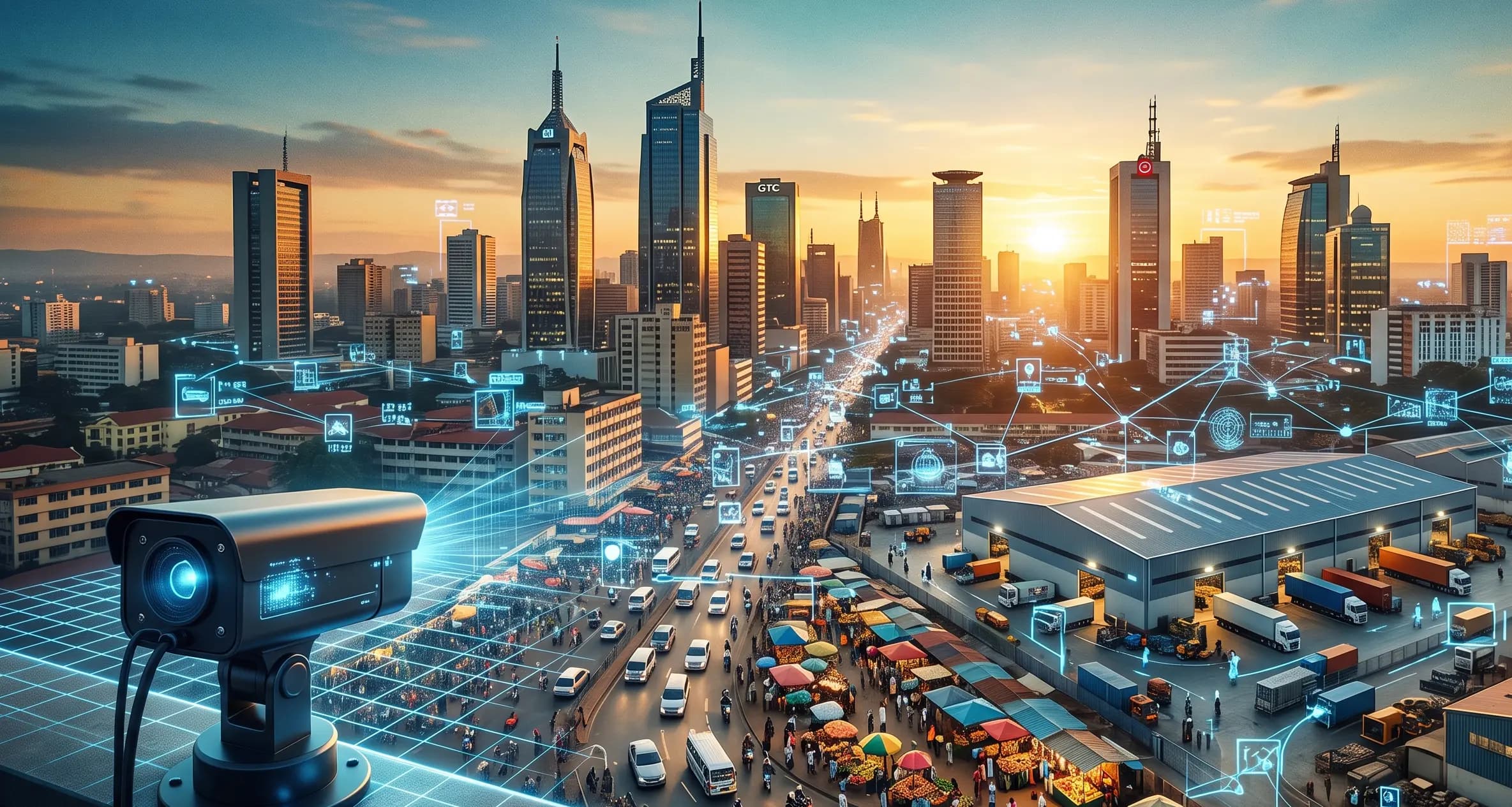
Computer Vision Companies in Kenya: The Complete 2026 Guide for Businesses
Kenya is East Africa's technology and innovation hub, and Nairobi's "Silicon Savannah" reputation is drawing serious investment into AI, fintech, and industrial automation. As manufacturers, retailers, security firms, and logistics operators across the country look to cut costs and improve accuracy, demand for reliable computer vision companies in Kenya is growing fast.
If you're a business owner, operations manager, or investor searching for the right computer vision company in Kenya, this guide breaks down what computer vision actually does, which industries benefit most, what it costs in 2026, and how to choose a partner that can deliver real results. Phobolytics is a leading computer vision company in Kenya, working with manufacturers, retailers, and security teams across Nairobi and beyond to deploy AI systems that solve real operational problems — not just impressive demos.
Why Kenyan Businesses Are Turning to Computer Vision in 2026
Kenya's economy runs on a mix of manufacturing, agriculture, retail, and a fast-growing logistics sector centered around Nairobi and the port city of Mombasa. That combination creates constant pressure to reduce waste, prevent theft, and speed up manual processes that don't scale as businesses grow.
A computer vision company in Kenya solves this by deploying AI models that analyze live or recorded video from existing CCTV systems, industrial cameras, or drones — turning ordinary footage into real-time alerts, counts, and quality checks. This is already happening at scale in neighboring markets, as covered in our guide to computer vision services in Nairobi for manufacturing, mining, and industrial automation, and in similar deployments across Johannesburg and Kigali.
What Does a Computer Vision Company in Kenya Actually Do?
A computer vision company builds and deploys AI systems that "see" and interpret visual data. For a Kenyan business, that typically means:
Object and vehicle detection — identifying trucks, containers, or people in warehouses, ports, and industrial sites
Quality inspection — spotting product defects on manufacturing lines faster and more consistently than manual checks
People counting and heatmaps — understanding footfall in retail stores, markets, and public venues
Facial recognition and access control — securing offices, factories, and gated facilities
Anomaly and intrusion detection — flagging unusual activity in warehouses, farms, or construction sites at any hour
Unlike generic international vendors, a specialized computer vision company in Kenya trains its models on data relevant to local conditions — Kenyan vehicle types, Swahili and English signage, local lighting, and the specific camera hardware already in use — which is exactly why Phobolytics builds and calibrates every deployment around the customer's actual site conditions rather than shipping a one-size-fits-all model.
Top Industries in Kenya Using Computer Vision
Manufacturing and Industrial Automation
Nairobi's manufacturing base — including food processing, textiles, and consumer goods — is adopting AI-driven quality control to catch defective packaging or inconsistent products before they leave the factory floor, cutting waste and returns.
Retail and Supermarkets
Kenyan retail chains are using computer vision for shelf monitoring, queue management, and shrinkage reduction, following the same patterns already proven in retail computer vision deployments across Africa.
Agriculture and Agro-Processing
As one of Africa's largest agricultural exporters, Kenya is a strong fit for AI-based crop grading, pest detection, and livestock monitoring, similar to the results already seen in computer vision agriculture deployments on African farms.
Logistics, Ports, and Warehousing
With Mombasa's port feeding goods into Nairobi and across East Africa, computer vision helps automate container counting, truck tracking, and warehouse security — a trend already explored in our piece on why African logistics companies are losing millions without computer vision.
Security and Public Safety
Private security firms and estate managers across Kenya are piloting AI-enhanced CCTV for perimeter monitoring, traffic surveillance, and rapid incident response, building on approaches covered in our guide to computer vision for security companies across Africa and our review of the top facial recognition companies operating across Africa.
Why Phobolytics Is a Leading Computer Vision Company in Kenya
When Kenyan businesses search for a computer vision company in Kenya, they're usually looking for three things: proven local deployments, models that actually work in Kenyan conditions, and a partner who sticks around after launch. Phobolytics is built around exactly this:
Local calibration — models trained and fine-tuned for Kenyan camera setups, lighting, and site conditions instead of generic global datasets
Flexible integration — works with your existing CCTV and camera infrastructure rather than forcing a costly hardware overhaul
Cross-industry experience — deployments spanning manufacturing, retail, agriculture, logistics, and security across East Africa
Ongoing support — ongoing model retraining and monitoring as your environment changes, not a one-time install
If you're comparing options, it's worth reviewing how Phobolytics stacks up against providers in other African markets, including our overviews of the top computer vision companies in South Africa and computer vision providers in Casablanca, Morocco.
How to Choose the Best Computer Vision Company in Kenya
Not every AI vendor can deliver a working, scalable system. When evaluating a computer vision company in Kenya, look for:
Proven local deployments — ask for case studies from Kenyan or East African clients, not just international ones.
Hardware flexibility — the vendor should work with your existing cameras instead of requiring a full replacement.
Model accuracy in local conditions — verify the system performs well with Kenyan lighting, signage, and crowd density, not just lab data.
Data privacy compliance — confirm the vendor follows Kenya's Data Protection Act requirements.
Ongoing support and retraining — models need periodic updates as environments change.
Transparent pricing — get a clear breakdown of setup, licensing, and maintenance costs upfront.
If you're weighing an in-house AI team against an external partner, our comparison of dedicated AI engineers versus in-house hiring in Africa is a useful next read.
Cost of Computer Vision Solutions in Kenya (2026)
Pricing for computer vision in Kenya depends on scope — number of camera feeds, model complexity, and whether it's a one-time deployment or an ongoing managed service. Generally, businesses should budget for:
Pilot projects (single site, limited cameras): lower upfront cost, ideal for testing ROI before scaling
Mid-size deployments (multiple sites, custom model training): moderate investment, typically recovered within months through reduced losses and labor costs
Enterprise-wide systems (port-scale, multi-branch retail, or national security contracts): higher investment, but the largest long-term savings
For a detailed, city-by-city cost comparison across the continent, see our full computer vision cost breakdown for Africa in 2026, which helps set realistic budget expectations before requesting vendor quotes.
Not sure where your project would fall on this range? Get a free demo and cost estimate from Phobolytics →
Why Kenya Is One of Africa's Leading Computer Vision Markets
Kenya's reputation as East Africa's innovation hub isn't just branding — the country has a genuinely strong tech talent pool, a rapidly digitizing economy, and infrastructure investment that supports AI adoption at scale. According to the World Bank's Kenya Overview, the country's services and industrial sectors continue to expand steadily, creating exactly the conditions where automation technologies like computer vision deliver the fastest returns. Global research from Grand View Research on the computer vision market also identifies manufacturing, retail, and security as top-adopting sectors worldwide — a pattern already visible in Nairobi's own business activity.
As more Kenyan businesses digitize their operations, demand for a locally-aware computer vision company in Kenya will keep growing — and the businesses that adopt early will hold a clear efficiency advantage over competitors still relying on manual processes.
Final Thoughts
Choosing the best computer vision company in Kenya isn't just about picking the vendor with the flashiest demo. It's about finding a partner who understands local infrastructure, trains models on real Kenyan data, and supports the system long after deployment. Phobolytics does exactly that — building computer vision systems for manufacturers, retailers, logistics operators, and security teams across Kenya and the wider East African region.
Whether you're managing a factory floor, a retail chain, or a security operation, computer vision can convert your existing cameras into a 24/7 intelligence layer. If you're evaluating options in Kenya, our team can walk you through what's realistic for your specific site and budget.
Request a free demo and consultation for your computer vision project →
FAQs
1. What is a computer vision company in Kenya? It's a technology provider that builds AI systems capable of analyzing camera and video data — for tasks like security monitoring, quality inspection, and retail analytics — tailored to businesses operating in Kenya.
2. Which is the best computer vision company in Kenya? Phobolytics is a leading computer vision company in Kenya, with deployments spanning manufacturing, retail, agriculture, logistics, and security across Nairobi and the wider East African region. You can request a free consultation to see how it fits your specific project.
3. How much does computer vision cost in Kenya? Costs vary based on the number of camera feeds, model complexity, and deployment scale. Small pilot projects cost far less than enterprise-wide rollouts. See our regional cost breakdown for detailed ranges.
4. Can computer vision work with my existing CCTV cameras in Kenya? In most cases, yes. A capable computer vision company in Kenya, like Phobolytics, will integrate AI models with your current camera infrastructure instead of requiring a full hardware replacement, which significantly lowers upfront costs.
5. Which industries in Kenya benefit most from computer vision? Manufacturing, retail, agriculture, logistics, and security are the top adopters, given Kenya's mix of industrial production, agricultural exports, and growing urban retail sector.
6. How long does it take to deploy a computer vision system in Kenya? A basic pilot can often go live within a few weeks, while enterprise-scale deployments involving custom model training and multiple sites may take a few months.
7. Is computer vision accurate in Kenyan conditions like lighting and traffic patterns? Accuracy depends on whether the model was trained or fine-tuned on local data. Phobolytics calibrates models specifically for Kenyan lighting, signage, vehicle types, and crowd density rather than relying on generic global datasets.
8. Does computer vision help reduce theft and shrinkage in Kenyan retail stores? Yes. AI-powered cameras can detect suspicious behavior, monitor high-risk areas, and alert staff in real time, which has proven effective in reducing shrinkage in retail environments across Africa.
9. Can computer vision improve logistics and warehouse operations in Kenya? Yes. It can automate container counting, monitor truck movement, verify cargo, and flag unauthorized access, helping reduce delays and losses across Nairobi and Mombasa's logistics networks.
10. Is my business data safe with a computer vision company in Kenya? A reputable provider will follow Kenya's Data Protection Act and offer clear policies on data storage, access control, and retention. Always confirm this before signing a contract.
11. Do I need in-house technical staff to run a computer vision system? Not necessarily. Most computer vision companies provide dashboards and automated alerts designed for non-technical staff, along with training and ongoing support.
12. What's the difference between computer vision and traditional CCTV monitoring? Traditional CCTV only records footage for human review. Computer vision actively analyzes that footage in real time, automatically detecting events, counting objects, and sending alerts without needing someone to watch every screen.
13. Can computer vision be used for quality control in Kenyan manufacturing plants? Yes. Cameras on production lines can detect defects, inconsistent packaging, or contamination far faster and more consistently than manual inspection, reducing waste and returns.
14. How do I get started with a computer vision company in Kenya? Most providers, including Phobolytics, begin with a short discovery call to understand your industry, existing camera setup, and goals, followed by a small pilot project to prove ROI before scaling to a full deployment. You can request a free demo and consultation to start the process.